There is a moment many foreigners experience during their first week in Cairo.
They look at the clock.
It is 11:30 PM.
And the city still feels wide awake.
People are walking.
Cafés are full.
Children are playing.
Shops are open.
Conversations continue on sidewalks and street corners.
For someone coming from a quieter city, the first reaction is often the same:
“Does Cairo ever go to sleep?”
The answer is more complicated than it seems.
The city feels alive after dark
In many places, the day slows down as evening arrives.
People return home.
Streets become quieter.
Businesses close.
Cairo often moves in a different direction.
As the sun goes down, many neighborhoods become more active.
The heat softens.
People leave their homes.
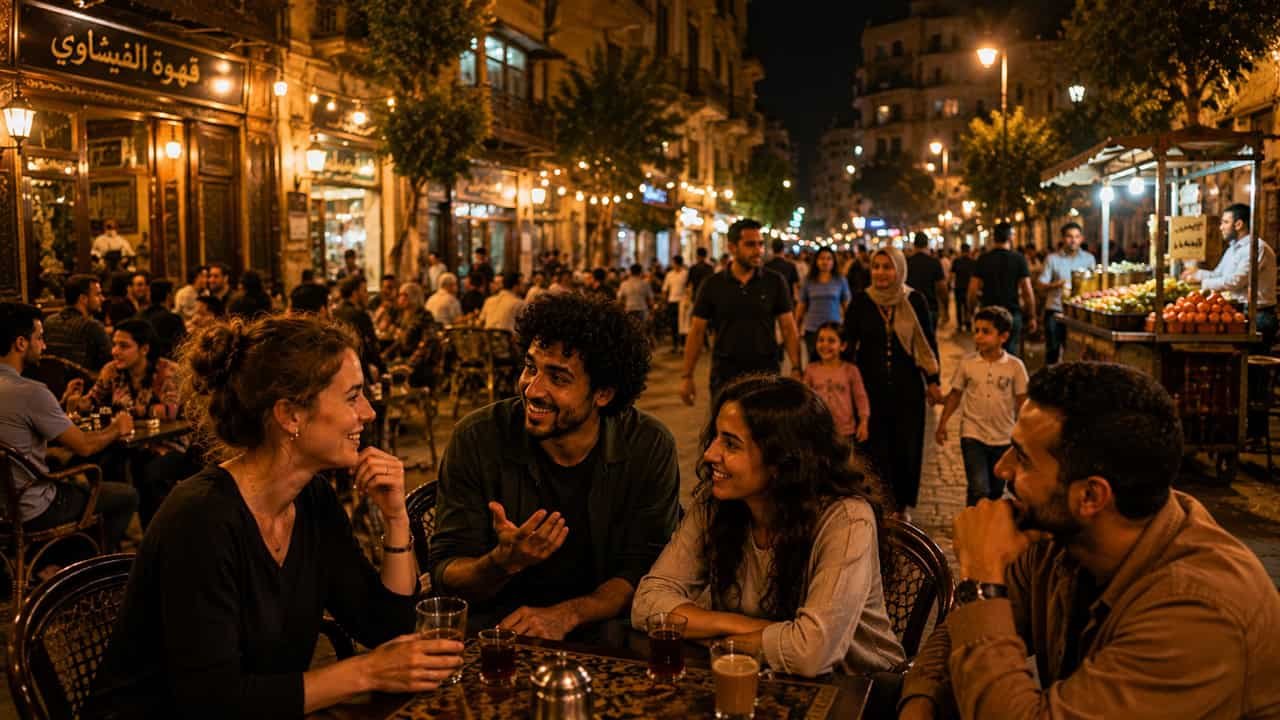
Friends meet for coffee.
Families go for evening walks.
The city begins another chapter of the day.
Night is part of social life
One of the first things foreigners notice is how much life happens outside.
People do not always rush home.
Instead, they spend time together.
A simple evening coffee can turn into hours of conversation.
A quick visit becomes a gathering.
A walk becomes an opportunity to meet neighbors and friends.
For many Egyptians, social life is not squeezed into a schedule.
It flows naturally through the evening.
Cafés become living rooms
Walk through Cairo at night and you will see cafés everywhere.
People are talking.
Laughing.
Watching football.
Sharing stories.
Discussing work.
Discussing family.
Discussing everything.
For many visitors, these cafés feel less like businesses and more like community spaces.
They become extensions of daily life.
Families are everywhere
One thing that surprises foreigners is how many families are outside late at night.
Parents.
Grandparents.
Children.
Entire groups walking together.
In some cultures, late evenings belong mostly to adults.
In Cairo, evenings often belong to everyone.
The city feels shared.
Time feels different
Foreigners often describe a change in their relationship with time.
The pace is not necessarily slower.
But it feels less rigid.
Conversations are allowed to continue.
Visits are allowed to last longer.
People are often more focused on the moment than the schedule.
This creates a different rhythm.
One that many visitors eventually grow to appreciate.
The city has its own rhythm
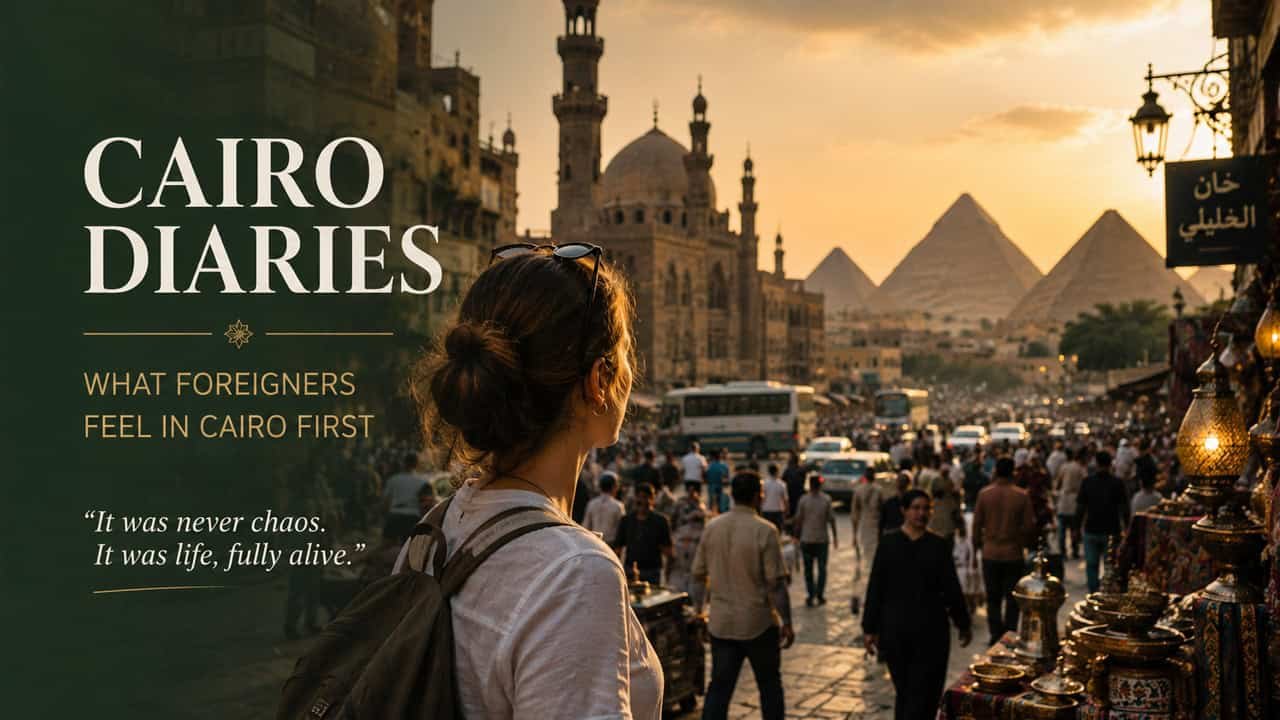
At first, Cairo’s energy can feel overwhelming.
There is always movement.
Always sound.
Always activity.
But over time, people begin to notice something else.
The city is not restless.
It is social.
The activity is not random.
It comes from people wanting to spend time together.
And once you see that, the city begins to feel different.
A final reflection
Many foreigners arrive expecting Cairo to slow down after sunset.
Instead, they discover another side of the city.
A side filled with conversation.
Community.
Family.
And life lived outdoors.
Cairo does not stay awake because people are busy.
It stays awake because people enjoy being together.
And once you experience that rhythm, quiet cities can feel surprisingly empty.