Why I Started Hebatia
There is a moment in every teacher’s life when they realize something simple but uncomfortable:
You can teach a language…
but that doesn’t mean people will truly feel it.
That was the moment Hebatia began.
I was teaching Arabic… but something was missing
For years, I have been teaching Arabic to non-native speakers — both Modern Standard Arabic and Egyptian Arabic.
My students could learn grammar rules, memorize vocabulary, and build correct sentences.
But when they stepped outside the classroom, something changed.
They would hear real Egyptians speak and suddenly feel:
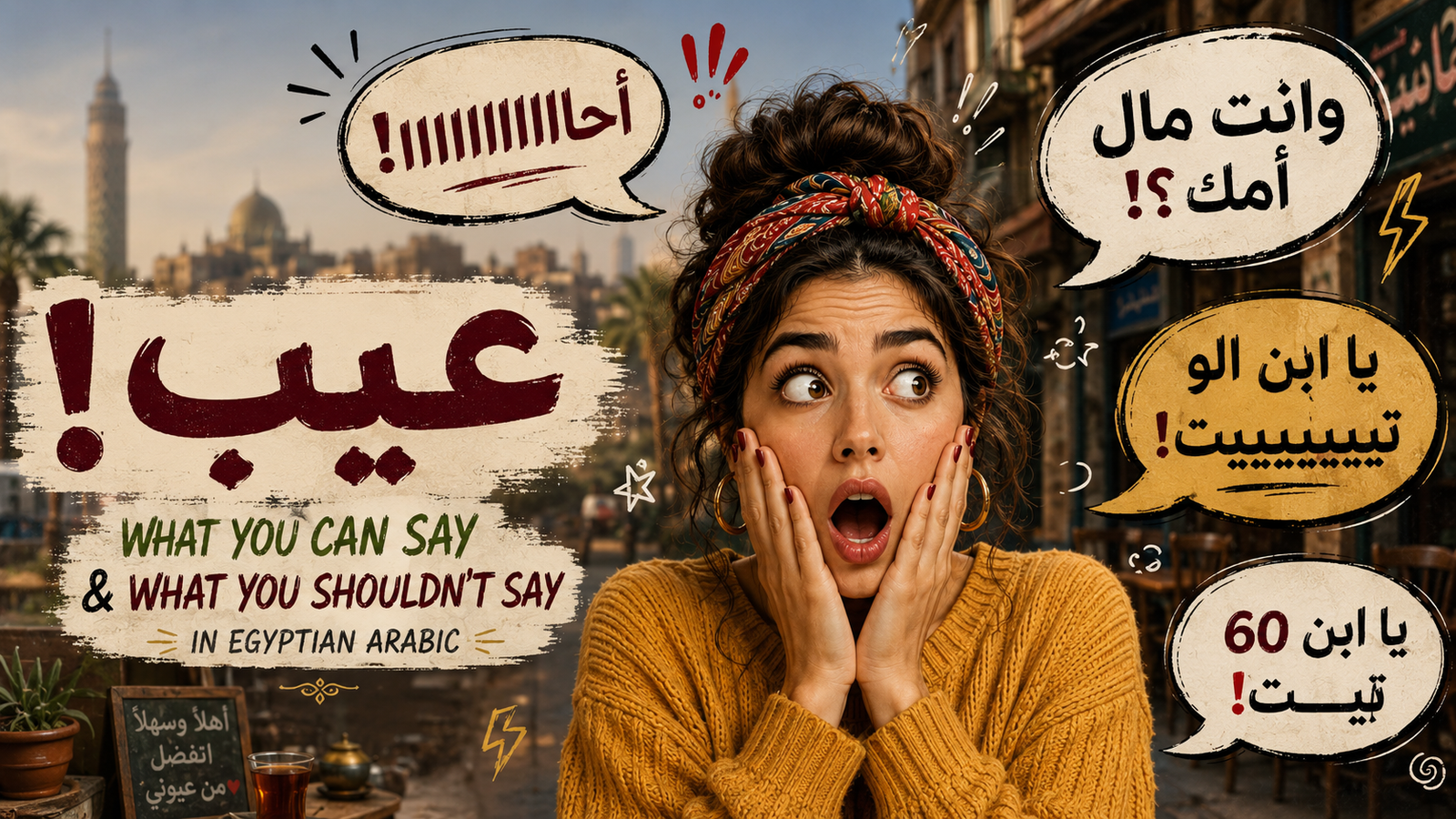
“This is not the Arabic I studied.”
And they were right.
Because Arabic in real life is not just a system.
It is a lived experience.
The real problem was never Arabic
Over time, I realized something deeper.
The problem was not Arabic itself.
It was the gap between:
🟨 classroom Arabic
and
🟨 real-life Arabic
Students were not struggling with language.
They were struggling with context.
And in Egypt, context is everything.
Language without culture feels incomplete
Arabic is not only words and grammar.
It is:
tone
emotion
rhythm
culture
human interaction
Without culture, language becomes flat.
And that is exactly what I kept seeing in traditional learning methods.
I wanted to build what I couldn’t find
Hebatia was born from a simple question:
What if Arabic learning felt like living inside the culture, not outside it?
Not textbooks.
Not isolated grammar rules.
Not memorization without meaning.
But something closer to:
real conversations
cultural understanding
stories
lived experiences
human connection
A place where Arabic is not only studied… but truly understood.
Hebatia is not only about Egyptian Arabic
Even though Egyptian Arabic is a core part of what I teach, Hebatia is not limited to it.
Arabic itself is layered.
There is:
Modern Standard Arabic (MSA)
Egyptian Arabic
and everything in between
Most learners are told to separate them.
But in real life, they constantly overlap.
So Hebatia treats Arabic as one living system.
A living language, not a divided one.
What Hebatia really is
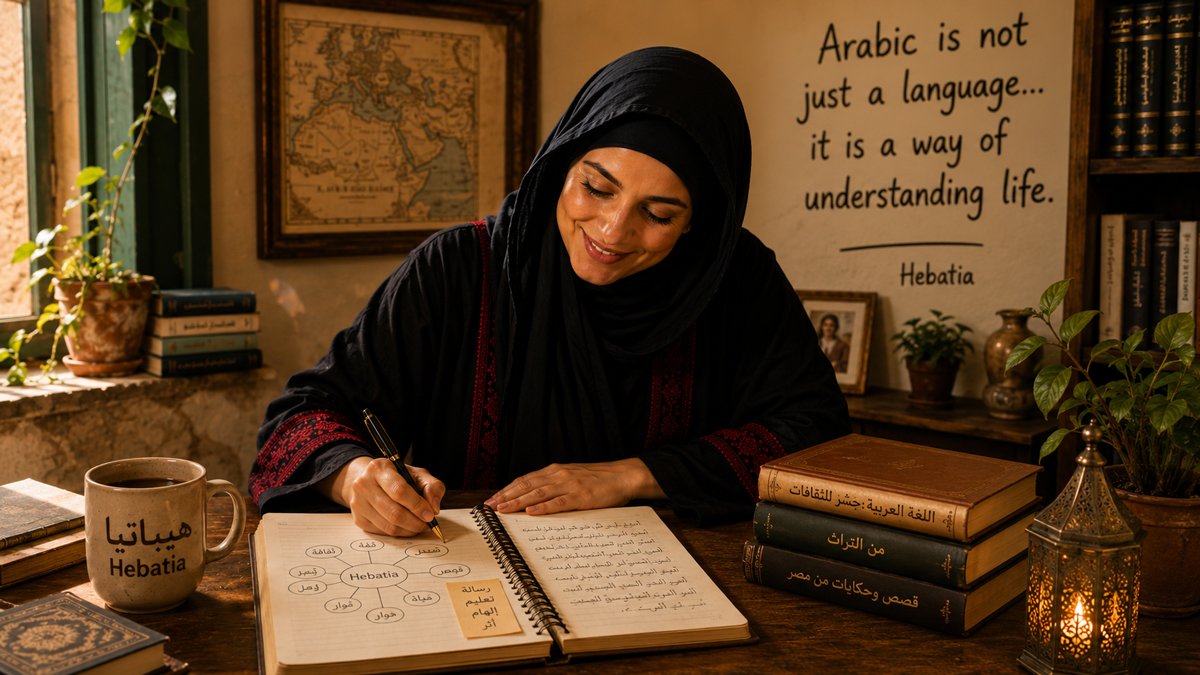
Hebatia is not just a learning platform.
It is:
a journal
a cultural space
a storytelling project
and a bridge between language and life
A place where learners don’t only ask:
“What does this word mean?”
But also:
“Why is it said like this?”
“What does it feel like in real life?”
“What does it reveal about the culture?”
A final note
If you are here to learn Arabic, or to understand Egypt…
Then I want you to know something:
You are not just learning a language.
You are learning how people think, feel, joke, argue, and live.
And that is exactly what Hebatia is here for.
Welcome to Hebatia
Not as a student.
But as someone entering the language through life itself.
What is the difference between MSA and Egyptian Arabic? هنعمل هايبر لينك يودي ع المقالات دي
Is Egyptian Arabic enough to communicate in Egypt?
Can I learn Arabic through culture?